UV reactive clothing glows because it contains fluorescent molecules that absorb ultraviolet light and re-emit it as...
Latest posts
-
 UV Reactive Clothing: What Actually Glows Under a Blacklight and WhyRead more
-
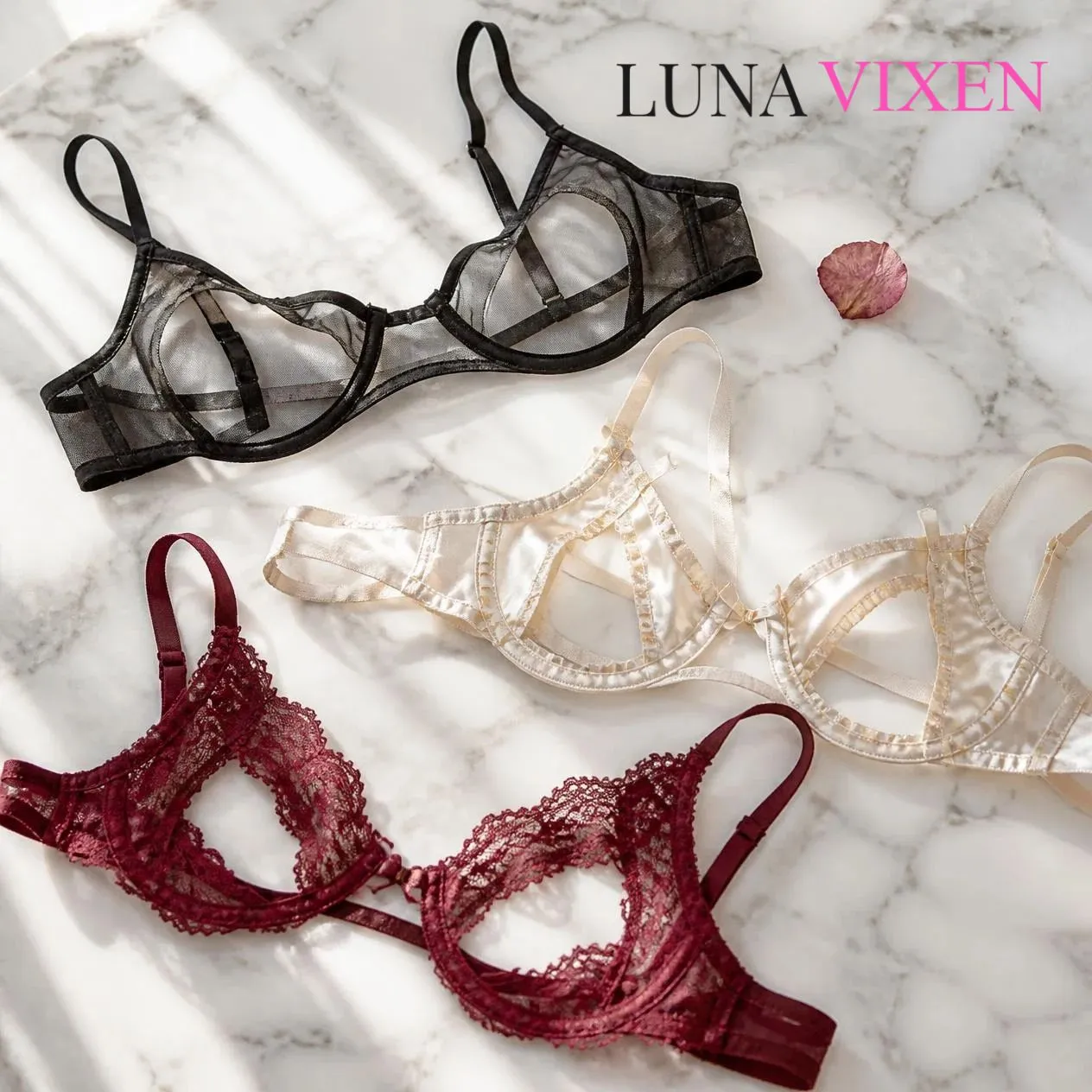 Open Cup, Peek-a-Boo and Cupless Bras: What They Are and How They FitRead more
Open cup, cupless, peek-a-boo, shelf, quarter cup: the names get used interchangeably almost everywhere, and they are...
-
 Lingerie for Every Anniversary: What to Wear and Why It WorksRead more
The right lingerie for a specific occasion is less about the garment and more about knowing what that moment actually...
-
 Plus Size Lingerie Fit Guide: Sizing, Fabric and What Actually WorksRead more
Plus size lingerie fit is its own skill set, and the biggest obstacle is usually language: sizes labeled Queen, 1X,...
-
 Lingerie for Every Body Type: What Works and WhyRead more
The cuts that feel right on your body are not random. Lingerie works or doesn't work based on how its structure...
-
 How to Buy Lingerie for the First Time (Without the Guesswork)Read more
Buying lingerie for the first time feels harder than it should be, mostly because no one explains the basics and...
-
 Types of Lingerie Fabric: What Sheer, Mesh and Lace Actually DoRead more
The words on a lingerie label are doing real work. Mesh, lace, powernet and satin each behave differently on the...
-
 How to Wash Lingerie Without Ruining It: A Guide by FabricRead more
Different fabrics fail for different reasons. Lace snags, satin watermarks, vinyl cracks, UV reactive dye fades under...
-
 Thigh High Stockings: Denier, Seams and How to Keep Them UpRead more
Thigh high stockings stay up when three things align: the right denier for the occasion, a band that fits your thigh...
-
 Corset vs Bustier vs Basque vs Waist Cincher: Which One Do You Actually Need?Read more
Corset, bustier, basque, waist cincher: the names get used interchangeably online and almost never mean the same...
Blog categories
Search in blog
Archived posts
Open Cup, Peek-a-Boo and Cupless Bras: What They Are and How They Fit
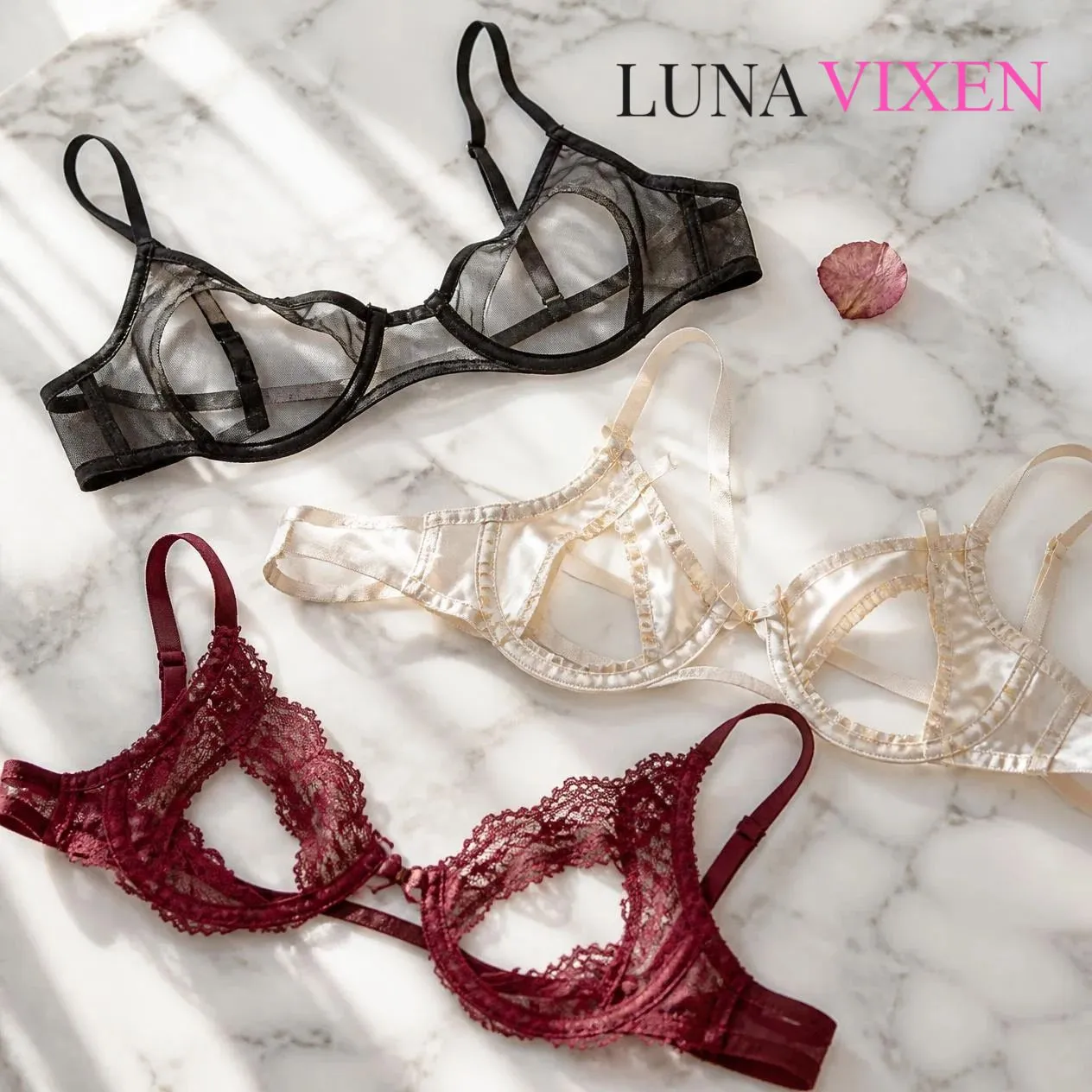
Open cup, cupless, peek-a-boo, shelf, quarter cup: the names get used interchangeably almost everywhere, and they are not the same thing. Each style exposes or supports differently, fits differently, and reads differently under or over clothing. This post maps the real distinctions, then covers what actually holds you in when there is no cup doing the lifting.
What is the difference between open cup, cupless, peek-a-boo, shelf, quarter cup, demi shelf and split cup bras?
These names describe how much of the breast each style covers and where the fabric stops. Open cup and cupless both leave the nipple fully exposed but differ in structure. Peek-a-boo adds a cut-out or sheer panel over coverage that otherwise exists. Shelf, quarter cup and demi shelf lift without covering. Split cup divides the breast into two framed sections.
An open cup bra has a full underwire frame with no fabric across the breast itself, so the nipple and areola are completely uncovered. The Devon Open Cup Bra with Harness and G String Set is a clean example of this construction. Cupless is often used interchangeably, though some brands use it to mean no cup structure at all, just straps that frame the breast from below.
A peek-a-boo bra has fabric cups with a window cut from the center, usually a circle or keyhole. The Severine Peek-a-Boo Cup Bra Set shows this well. The breast is supported and shaped, the nipple exposed through the aperture only.
A shelf bra stops below the nipple entirely, lifting the breast without any upward coverage. A quarter cup adds a thin horizontal band just above the underwire that covers the lower breast only. Demi shelf splits the difference, a shallow cup that cradles the underside and sides but leaves the top half and nipple bare.
A split cup bra divides each cup down the center with a gap or seam, creating two defined sections that push the breast slightly outward.
How does an open cup bra actually fit when there is no cup to do the work?
The structure lives in the frame, not the cup. An open cup bra lifts and positions the breast using an underwire, a firm bottom band, and side panels that push inward. The breast sits above the opening, held from below and the sides. The nipple and upper breast stay fully exposed by design.
This is why band fit matters more here than in a standard bra. If the band rides up or sits loose, there is nothing else doing the supporting. The band should lie flat against the ribcage all the way around, and the underwire should follow the natural crease of the breast without digging in or floating away from the skin.
The wire shape varies by construction. A V-wire style, like the Lace V Wire Open Cup Bra, creates a more dramatic lift with a narrow center point that separates and projects. A standard underwire traces a rounder arc and tends to suit a wider root breast more comfortably.
Straps pull the frame upward, so adjusting them is not optional. Straps set too loose and the bottom band does all the lifting alone, which puts the breast lower than intended. Cage styles add extra anchor points across the torso, which redistributes tension in a way that some people find more stable than a two-strap design.
Cup size from your regular bras is still a useful starting point, but fit on an open cup depends heavily on breast shape. Projected, forward-facing shapes tend to sit cleanly in the frame. Shallower or wider shapes may need a larger wire width to stay centered.
Do open cup and cupless styles work on a smaller chest?
Yes, and often better than people expect. Open cup and cupless bras were not designed around volume. They work with shape, placement and framing, which means a smaller chest frequently gets more visual impact from them, not less. There is no cup to fill, so the fit anxiety that comes with traditional bra sizing largely disappears.
The structural element that matters most is the underwire or band sitting cleanly against the ribcage. When that foundation is right, the open frame draws a defined line across the chest and creates the appearance of a lifted, rounded shape. A style with a firm v-wire shelf, like the lace v-wire open cup bra, does this particularly well on smaller busts because the angle of the wire does the work that padding would otherwise fake.
Cage and harness constructions add a second layer of visual interest beyond the chest itself, which shifts the eye across the whole silhouette rather than fixating on breast size. The strapping on something like the Devon open cup harness set creates geometry that reads as deliberate and striking regardless of cup size.
One thing to avoid is an open cup style with a very wide horizontal band sitting too high on the ribcage. On a smaller chest that placement can flatten rather than frame. A narrower underwire sitting lower on the sternum almost always looks sharper.
Softer mesh and delicate lace styles tend to feel proportionate and unforced. Heavier vinyl or structured leather styles can read as bolder, which is equally valid depending on what the moment calls for.
Can any of these styles be worn under clothes?
Some of them, yes. Open-cup bras leave the nipples exposed by design, so anything sheer or fitted on top is out. But a few styles here sit closer to a standard bra in silhouette, and those can work under the right outerwear with a little thought about what's showing and what isn't.
The Aubrielle diamond mesh set is a reasonable candidate. The mesh sits against the skin without heavy hardware or rigid cage construction, so under a blazer worn open or a loose button-down, the straps read as intentional layering rather than visible underwear.
Harness detailing is a different situation. The Devon open cup bra with harness has straps that cross the chest and back in a way that's meant to be seen. That's not a limitation, it's the point. Pair it with a deep-V top or wear the harness over a sheer bodysuit and the construction becomes the outfit.
Rigid cage frames, grommet tape, vinyl, and fringe all have bulk or texture that telegraphs through most fabrics. Those pieces are better treated as outerwear in their own right, styled over a skirt or under an open coat, rather than hidden.
The honest answer is that most open-cup designs are built to be looked at, not covered up. If under-clothes wearability is the actual goal, the softer mesh styles get you there. If the goal is wearing something that feels charged even when nobody else can see it, that's a different question entirely, and most of these deliver on that without showing a single strap.
Which style suits which occasion?
The cut and construction of a set should match the energy of the moment. Soft lace with a delicate open cup reads intimate and romantic. Structured hardware, vinyl and cage framing read deliberately theatrical. Getting that match right is what makes the difference between a piece that lands and one that feels off.
For a first night or something that stays between two people, a set built around fine lace and minimal hardware tends to work. The Severine peek-a-boo cup bra and open back panty set is a good example: suggestive without being aggressive, the kind of thing that photographs in your memory rather than on a stage.
Performance or fantasy play calls for more architecture. Leg straps, grommet tape and cage framing signal that you know exactly what you are doing. The open cup caged bra with grommet tape strapping suits that register well. Same logic applies to the fringe and tassel set, which is built for movement and reaction rather than quiet moments.
Occasion also factors in body temperature, literally. Vinyl sits against skin differently than stretch mesh, and a full harness is a commitment once it is on. Think about how long you will be wearing it, whether the room is warm and what comes after.
A garter skirt set occupies useful middle ground. It layers over or under other pieces, which gives you flexibility when the night is not fully scripted.
Common questions
Are open cup bras supposed to feel supportive or is that not the point?
Support varies by design, and both exist. Some open cup and cupless styles use an underwire and a structured frame that genuinely lifts and positions, so you get real hold without any coverage. Others are purely decorative, built around straps and hardware with no structural intention at all. The difference usually shows in the construction: a banded underwire signals support, thin elastic signals display. At LunaVixen the product notes specify which is which, so you are not guessing at checkout.
What size range do peek-a-boo and cupless bras usually come in?
Most mainstream ranges run 32A to 40DD, which covers a lot of ground but still leaves out fuller busts and smaller band sizes. LunaVixen stocks a wider spread because the demand is real and the gap in the market has always been obvious. If you are outside the standard window, filter by size first before falling for a specific style. Finding the right band fit matters more here than in a standard bra because the frame does all the structural work the cup normally shares.
Is there a difference between a shelf bra and a quarter cup bra?
Yes, and the difference is worth knowing before you buy. A shelf bra has a horizontal band of fabric or lace that sits beneath the breast, lifting it forward and leaving everything above fully exposed. A quarter cup sits slightly higher and has a small cup piece, maybe two inches of material, that cradles the lower breast rather than just pushing from underneath. The quarter cup gives a touch more lift and a different silhouette. Neither covers the nipple. The shelf tends to read more raw; the quarter cup reads more structured.
Do these styles come as matching sets with knickers?
Many do. Coordinating briefs, thongs and suspender belts are a practical reason to shop a single boutique rather than mixing brands, because dye lots and lace patterns actually match when they come from the same collection. At LunaVixen a good portion of the open cup and shelf bra styles are designed as sets, and the knicker style is usually noted on the bra page so you can see the pairing before you add anything to your cart. Buying the set also tends to work out better on price per piece than buying separately.
Posted in:
Lingerie
Related posts
-
 Types of Lingerie: The Complete Guide
Lingerie covers a lot of ground, from a barely-there bodysuit on a Tuesday to a structured corset for a night out....Read more
-
 Babydoll vs Chemise: What's the Difference?
Babydoll, chemise, teddy, bodysuit: four words that describe four genuinely different garments, and the industry does...Read more
-
 How to Measure for Lingerie (and Actually Get It Right)
Lingerie sizing is not a mystery, but it does work differently from the jeans or tops you buy without thinking twice....Read more
-
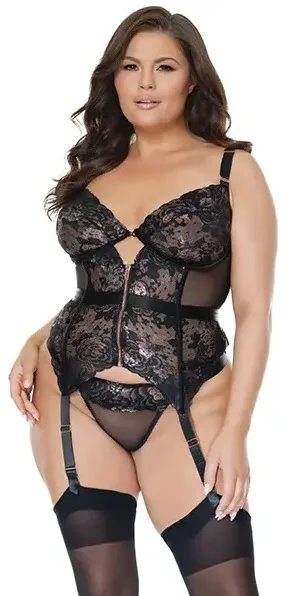 Corset Garter Sets, Explained
A corset garter set pairs a structured, boned corset or bustier with a matching garter belt so the whole look comes...Read more
-
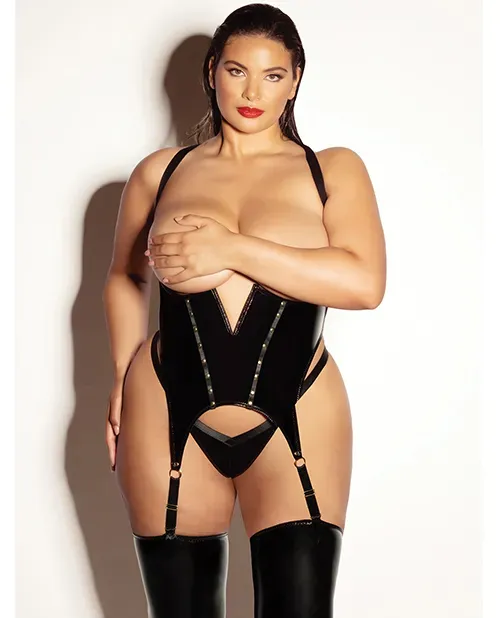 Faux Leather Lingerie: Vinyl, Wet Look and How to Care for All of It
Faux leather lingerie, vinyl bodysuits and wet look sets share a glossy surface and almost nothing else in common...Read more