UV reactive clothing glows because it contains fluorescent molecules that absorb ultraviolet light and re-emit it as...
Latest posts
-
 UV Reactive Clothing: What Actually Glows Under a Blacklight and WhyRead more
-
 Open Cup, Peek-a-Boo and Cupless Bras: What They Are and How They FitRead more
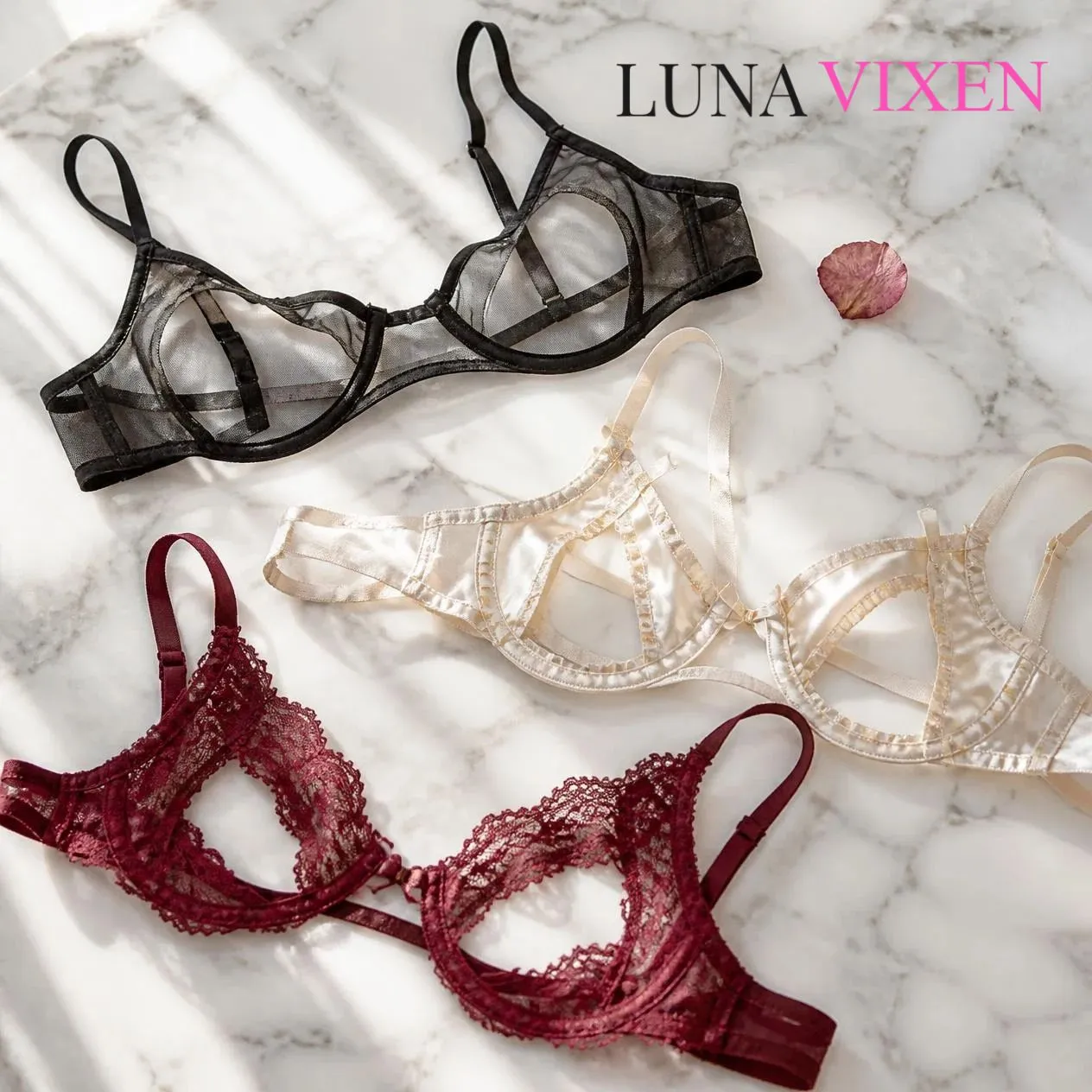
Open cup, cupless, peek-a-boo, shelf, quarter cup: the names get used interchangeably almost everywhere, and they are...
-
 Lingerie for Every Anniversary: What to Wear and Why It WorksRead more
The right lingerie for a specific occasion is less about the garment and more about knowing what that moment actually...
-
 Plus Size Lingerie Fit Guide: Sizing, Fabric and What Actually WorksRead more
Plus size lingerie fit is its own skill set, and the biggest obstacle is usually language: sizes labeled Queen, 1X,...
-
 Lingerie for Every Body Type: What Works and WhyRead more
The cuts that feel right on your body are not random. Lingerie works or doesn't work based on how its structure...
-
 How to Buy Lingerie for the First Time (Without the Guesswork)Read more
Buying lingerie for the first time feels harder than it should be, mostly because no one explains the basics and...
-
 Types of Lingerie Fabric: What Sheer, Mesh and Lace Actually DoRead more
The words on a lingerie label are doing real work. Mesh, lace, powernet and satin each behave differently on the...
-
 How to Wash Lingerie Without Ruining It: A Guide by FabricRead more
Different fabrics fail for different reasons. Lace snags, satin watermarks, vinyl cracks, UV reactive dye fades under...
-
 Thigh High Stockings: Denier, Seams and How to Keep Them UpRead more
Thigh high stockings stay up when three things align: the right denier for the occasion, a band that fits your thigh...
-
 Corset vs Bustier vs Basque vs Waist Cincher: Which One Do You Actually Need?Read more
Corset, bustier, basque, waist cincher: the names get used interchangeably online and almost never mean the same...
Blog categories
Search in blog
Archived posts
Plus Size Lingerie Fit Guide: Sizing, Fabric and What Actually Works
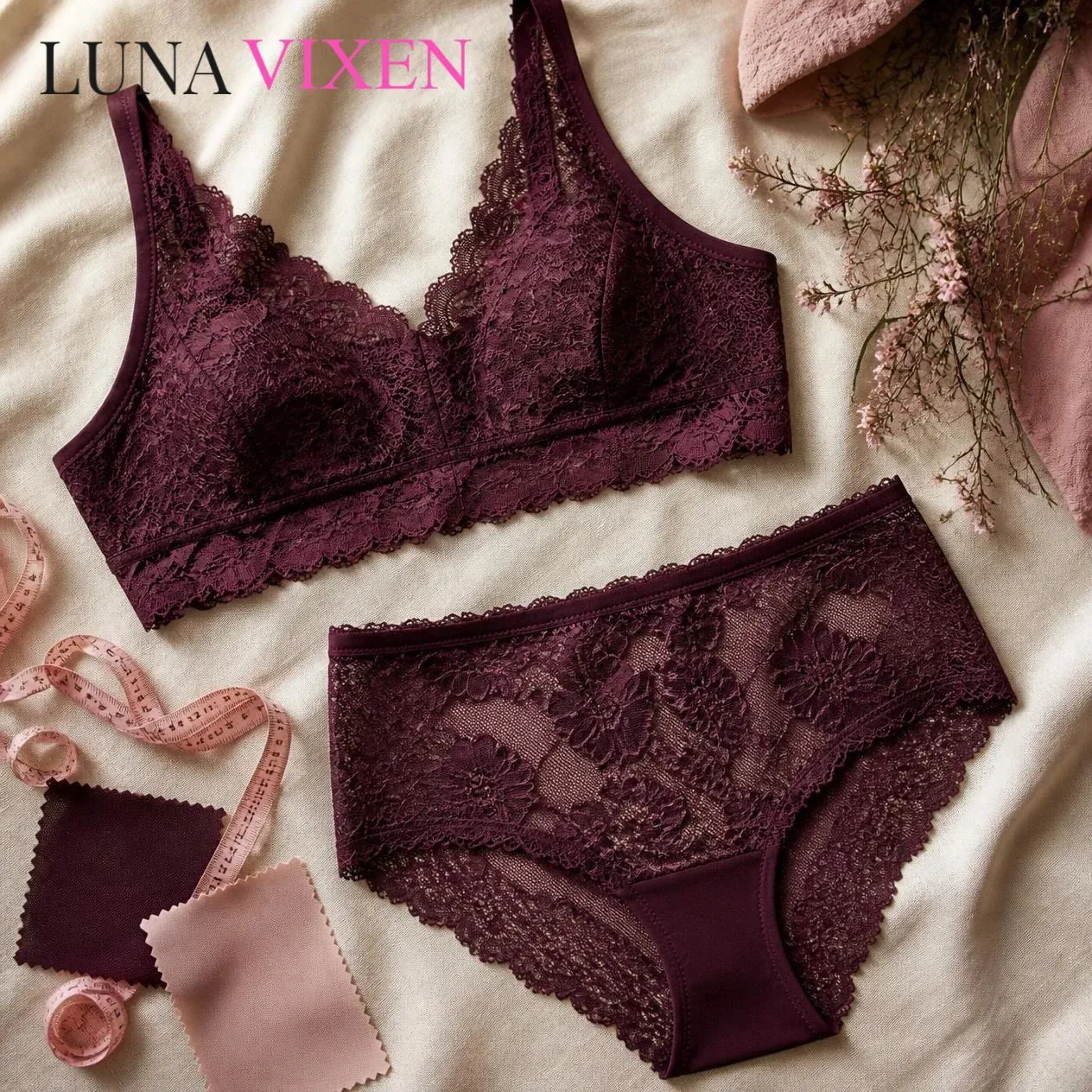
Plus size lingerie fit is its own skill set, and the biggest obstacle is usually language: sizes labeled Queen, 1X, 2X, 3X and 4X don't mean the same thing across brands, and a style that fits beautifully in one cut can gap or dig in another. This guide breaks down what those labels actually refer to, which construction details do the real work at larger sizes, and which styles give you the most room to get it right.
What does Queen size actually mean in lingerie?
Queen size is a sizing tier designed to fit roughly a size 14 to 22, sitting between standard and plus in some brand systems, or used interchangeably with plus in others. It typically signals extra room through the hips, seat and thighs without the proportional scaling that a full plus size cut applies across the torso.
The honest complication is that Queen is not a regulated term. One brand's Queen runs a hip measurement of 45 to 50 inches. Another starts at 42. A third uses it only for hosiery and ignores it entirely for bodysuits. That inconsistency is why checking the actual measurement chart matters more than trusting the label.
Hosiery is where Queen sizing has the longest track record and the most standardized meaning. Stockings and pantyhose labeled Queen generally account for a fuller calf and higher hip, which changes the knit tension and gusset placement in ways that affect both comfort and durability. A standard pair worn on a Queen-sized body will roll, dig or run faster at the seams.
For everything else, bodysuits, teddies, chemises, the cut details matter as much as the size tier. A Queen bodysuit with a high spandex content and adjustable straps will fit a wider range of bodies than a rigid mesh cut in the same label size. Fabric stretch percentage, usually listed in the product description, is the most reliable indicator of actual fit range.
If you are shopping plus size lingerie and seeing both Queen and Plus options from the same brand, pull the measurement charts side by side. The numbers will tell you more than the tier names ever will.
How do 1X through 4X map against standard bra and clothing sizes?
The short answer: 1X typically aligns with a women's 14 to 16, 2X with an 18 to 20, 3X with a 22 to 24, and 4X with a 26 to 28. Bra band sizes that tend to run alongside those ranges are roughly 36 to 38 for 1X, 40 to 42 for 2X, 44 to 46 for 3X, and 48 to 50 for 4X.
Those numbers are a starting point, not a contract. Lingerie sizing is set by individual brands, and a 2X babydoll cut for stretch mesh sits differently than a 2X structured bodysuit with underwire. The fabric, the cut, and the amount of built-in stretch all shift where a size actually lands on a body.
Cup volume is the other piece most size charts leave out. A 40DDD and a 40B both wear the same band size but need completely different bust room. When a garment lists only an X-size without cup guidance, check whether the brand offers a separate size guide. The Escante size guide is a good example of how a brand can break this down with actual measurements rather than just letter ranges.
Hip-to-waist ratio matters too, especially for anything with a defined waist, like a corseted teddy or high-waist brief. Someone with a 14-inch difference between waist and hip may need to size up even when their overall measurements sit squarely in one range.
When in doubt, measure your bust, natural waist, and fullest hip point, then compare those numbers directly to the brand's chart. The plus size lingerie collection notes stretch allowances on individual product pages, which makes that comparison a lot more useful than guessing from a letter alone.
Which construction details matter most for fit at a size 2X and above?
The details that move the needle most are: seam placement, the width and placement of the band, the cut of the gusset, and how much give the fabric carries across the fullest points. Get those right and a 2X fits like it was made for your body. Get them wrong and sizing up won't fix it.
Bands are the first place cheap construction shows. A band that sits too narrow relative to body depth will roll and cut in, regardless of the size on the tag. Look for a band that's at least an inch wide, ideally finished with a flat or encased elastic rather than raw-edge stitching that bites under pressure.
Side seams should sit exactly at the hip, not pulled forward or back. When a pattern isn't graded properly through the curve, the seam migrates toward the front, which creates both a visual and physical drag. That's a construction problem, not a fit problem you can size your way out of.
Fabric matters as much as cut. A fabric with good four-way stretch, like a heavy spandex-blend mesh or a substantial knit, distributes tension across the whole garment. Something with only horizontal stretch will gap at the back and bind at the front. Check the fabric content before you commit.
Gusset width is quietly important in plus size panties specifically. A narrow gusset designed for a smaller cut will not sit flat or comfortable on a fuller body, and no amount of pulling will fix the geometry.
The plus size lingerie section is organized in a way that makes it easier to filter by construction type rather than just sorting by size.
Which lingerie styles have the most forgiving range for plus size bodies?
Babydolls, chemises and wrap-style bodysuits give the widest fit range because they rely on drape rather than compression. Stretch lace teddies and open-back pieces with adjustable ties are similarly low-risk. These cuts accommodate hip-to-waist differences and softer midsections without a fight.
Babydolls in particular are built around the bust and fall free from there, which means a single size can work across a meaningful range of body shapes. Look for styles with a defined underwire or shelf bra at the top so there's actual support, not just fabric floating in the general area.
Stretch lace is your most reliable fabric here. A four-way stretch lace teddy that sits at a 1X can often still look intentional at a 3X because the material moves with the body rather than against it. Woven satin and structured corset boning are the opposite, they're cut to a fixed silhouette and the margin for error is narrow.
Tie closures and ring-and-slider hardware are worth seeking out. A side-tie chemise or an adjustable strap harness lets you dial in the fit yourself instead of hoping a size chart got it right. That hardware detail is especially useful around the hips and underbust, where standard sizing tends to break down fastest.
If you're shopping for something that goes over another garment, plus size hosiery and thigh-highs with a silicone-topped band stay up without a garter and work across a wide thigh circumference without cutting in.
The full plus size lingerie range at LunaVixen is organized by style, which makes it easier to filter by cut rather than guessing from a photo.
```html
How do you know when a plus size lingerie fit is actually right?
The fit is right when nothing pulls, digs, gaps or spills, and you stop thinking about it. Straps sit flat without cutting into the shoulder. Underwire, if there is any, follows the natural curve of your breast and lands on the ribcage, not on breast tissue. The fabric lies smooth against your skin rather than stretching white at the seams.
Band fit is the detail most people miss. A bra band should sit level all the way around, not ride up at the back. If it climbs when you lift your arms, the band is too big and the support is already gone. On a well-fitting band you should be able to slide two fingers underneath, not four.
With plus size lingerie, cut matters as much as size number. A babydoll with a defined empire seam sits comfortably above the fullest part of the belly and drapes free below it. A bodysuit needs enough rise in the torso so the snaps at the crotch close without pulling the neckline down. High-waist bottoms should grip at the natural waist, not roll down to the hip within ten minutes of wearing them.
One useful check: look at the leg openings on briefs or thongs. Elastic that leaves a temporary red mark after a few hours is too tight. A faint impression that fades in under five minutes is normal elastic doing its job.
If you are working from a brand's chart, the Escante size guide walks through both the measurements and how to read them, which is worth doing before you order rather than after.
```
Common questions
Is Queen size the same as 1X?
Not always, and assuming they match is one of the most common fit mistakes in plus size lingerie. Queen is a legacy sizing term that most brands define loosely, typically covering a range somewhere around 160 to 200 pounds or a size 14 to 18. 1X is a numeric plus size that usually corresponds to a 16 to 18. There is overlap, but a Queen-sized thigh-high stocking and a 1X brief are built on completely different measurement logic. Always check the brand's actual size chart rather than reading Queen as a direct translation.
Why does my size 3X fit from one brand but not another?
Because 3X is not a standardized measurement, it is a label. One brand's 3X is drafted on a fit model with a 48-inch hip. Another starts from a straight-size block and grades up, which compresses the hip room and lengthens the rise in ways that don't match a curvier body. Fabric makes it worse. A 3X in a stiff microfiber will fit smaller than the same number in a four-way stretch lace. The fix is measuring your own hip and waist, then matching those numbers to each brand's specific chart rather than trusting the size designation alone.
What should I look for in a plus size bra-and-panty set if I have a larger band size?
Prioritize the bra construction first, because a matching set that works is built around a bra that actually fits. Look for sets where the bra has a true band, meaning multiple hook-and-eye columns, full-width channeling under the cups and side panels with some vertical height. That height controls projection and side spillage in a way a narrow band cannot. On the brief side, check that the panty is cut from the same size range as the bra, not just scaled from a smaller block. A high-waisted brief or a shortie with a wide waistband will sit clean against a fuller torso without rolling.
Do underwire styles work at larger cup sizes or should I look for wire-free?
Underwire works beautifully at larger cup sizes when it is the right shape for your breast root width. The issue is rarely wire versus wire-free, it is whether the wire's width and projection match your actual cup shape. A wire that is too narrow digs into breast tissue instead of sitting on chest wall. Look for styles with wider, more projected wire channels, often labeled full-bust or engineered-fit by brands that draft specifically for DD through K cups. Wire-free is a genuinely good option too, but only in styles with substantial center panels and side support, not just a soft bralette scaled up.
Posted in:
Lingerie
Related posts
-
 Types of Lingerie: The Complete Guide
Lingerie covers a lot of ground, from a barely-there bodysuit on a Tuesday to a structured corset for a night out....Read more
-
 Babydoll vs Chemise: What's the Difference?
Babydoll, chemise, teddy, bodysuit: four words that describe four genuinely different garments, and the industry does...Read more
-
 How to Measure for Lingerie (and Actually Get It Right)
Lingerie sizing is not a mystery, but it does work differently from the jeans or tops you buy without thinking twice....Read more
-
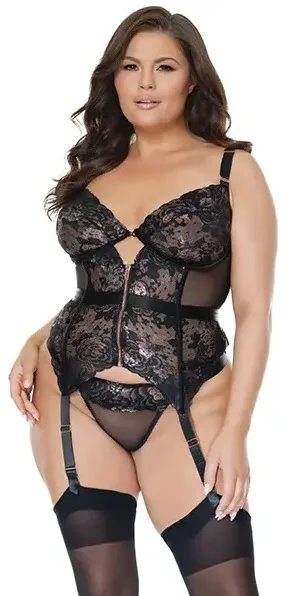 Corset Garter Sets, Explained
A corset garter set pairs a structured, boned corset or bustier with a matching garter belt so the whole look comes...Read more
-
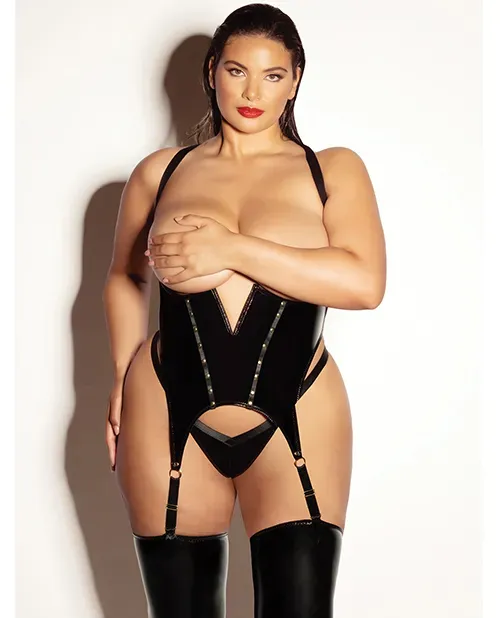 Faux Leather Lingerie: Vinyl, Wet Look and How to Care for All of It
Faux leather lingerie, vinyl bodysuits and wet look sets share a glossy surface and almost nothing else in common...Read more