UV reactive clothing glows because it contains fluorescent molecules that absorb ultraviolet light and re-emit it as...
Latest posts
-
 UV Reactive Clothing: What Actually Glows Under a Blacklight and WhyRead more
-
 Open Cup, Peek-a-Boo and Cupless Bras: What They Are and How They FitRead more
Open cup, cupless, peek-a-boo, shelf, quarter cup: the names get used interchangeably almost everywhere, and they are...
-
 Lingerie for Every Anniversary: What to Wear and Why It WorksRead more
The right lingerie for a specific occasion is less about the garment and more about knowing what that moment actually...
-
 Plus Size Lingerie Fit Guide: Sizing, Fabric and What Actually WorksRead more
Plus size lingerie fit is its own skill set, and the biggest obstacle is usually language: sizes labeled Queen, 1X,...
-
 Lingerie for Every Body Type: What Works and WhyRead more
The cuts that feel right on your body are not random. Lingerie works or doesn't work based on how its structure...
-
 How to Buy Lingerie for the First Time (Without the Guesswork)Read more
Buying lingerie for the first time feels harder than it should be, mostly because no one explains the basics and...
-
 Types of Lingerie Fabric: What Sheer, Mesh and Lace Actually DoRead more
The words on a lingerie label are doing real work. Mesh, lace, powernet and satin each behave differently on the...
-
 How to Wash Lingerie Without Ruining It: A Guide by FabricRead more
Different fabrics fail for different reasons. Lace snags, satin watermarks, vinyl cracks, UV reactive dye fades under...
-
 Thigh High Stockings: Denier, Seams and How to Keep Them UpRead more
Thigh high stockings stay up when three things align: the right denier for the occasion, a band that fits your thigh...
-
 Corset vs Bustier vs Basque vs Waist Cincher: Which One Do You Actually Need?Read more
Corset, bustier, basque, waist cincher: the names get used interchangeably online and almost never mean the same...
Blog categories
Search in blog
Archived posts
Types of Fishnet Stockings: Every Style Explained, Plus How to Keep Them From Running
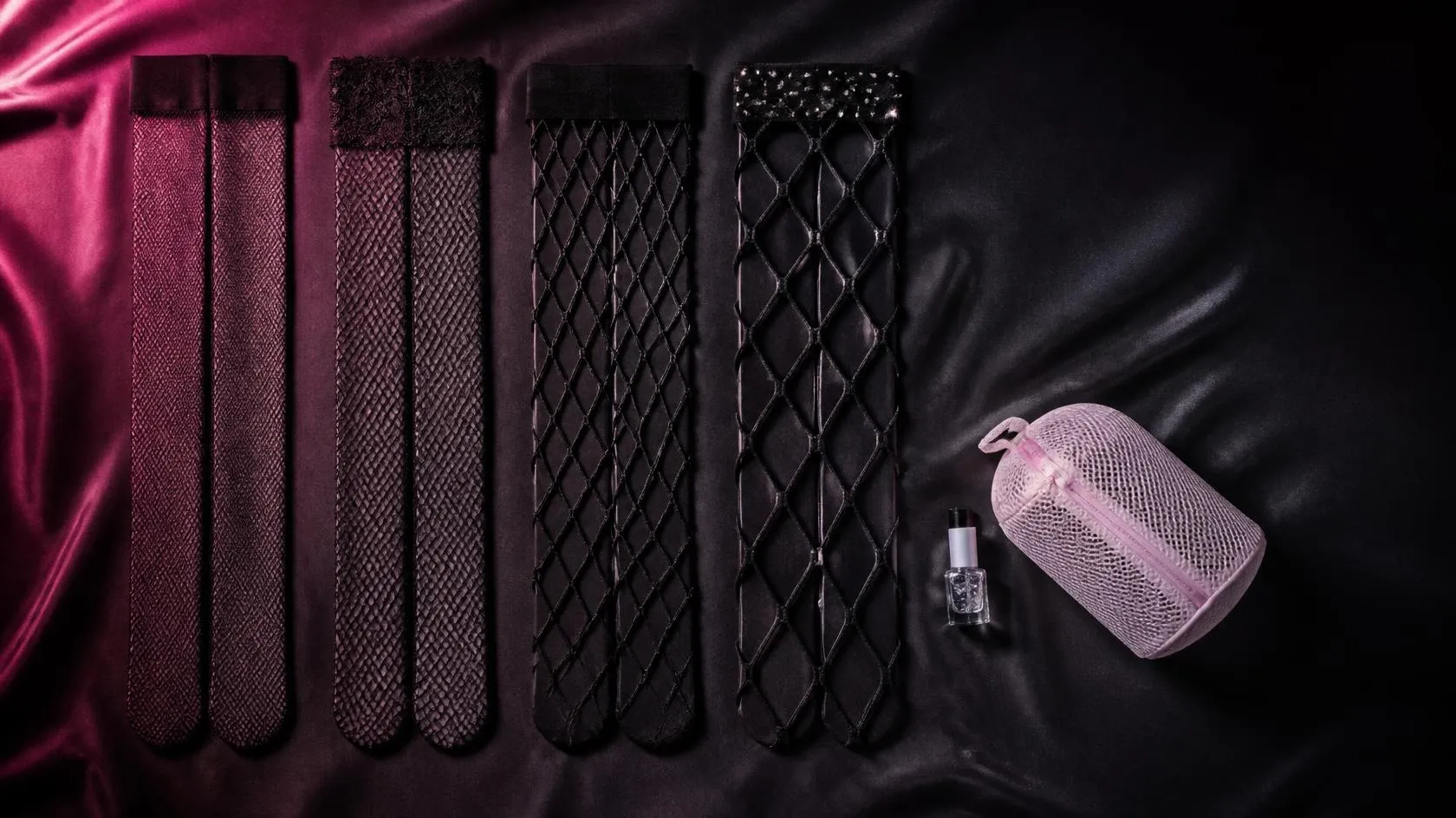
Fishnet comes in four distinct constructions, each with its own net size, weight and wear life, and the right one depends on whether you want a barely-there veil, a bold graphic texture or something tough enough to outlast a full night out. Micro fishnet reads almost like sheer hosiery from a distance. Standard diamond net is the classic you picture. Industrial and whale net are statement pieces with a completely different visual weight. This post maps all four styles and then gets into the one thing nobody explains well enough: how to actually stop them from running once you own them.
What are the main types of fishnet stockings and how are they different?
The four categories that matter are mesh size, coverage, top finish and construction detail. Micro mesh sits close to the skin and reads almost opaque at a distance. Classic diamond fishnet has the open grid most people picture. Wide-net styles are more graphic, more revealing and tend to photograph dramatically.
Coverage is the next split. Thigh highs stop at the upper leg and stay up by grip band alone or with a garter. Bodystockings run from shoulder to toe as one piece, which changes how you wear them and what you wear over them. The floral fishnet bodystocking with attached garters and thigh highs is its own category, technically, since the top and stockings are separate pieces that connect.
The top band is where thigh highs diverge the most. A plain silicone-lined band is minimal and hides under almost anything. A lace top adds texture and a softer finish. Scalloped stretch lace is cut differently than straight lace and sits more securely on rounder thighs without digging.
Then there are construction details that shift the whole register of a stocking. Strap and ring hardware at the top reads structured, almost harness-adjacent. Rhinestone trim catches light in a way plain fishnet does not, which suits a specific occasion and not much else. Floral jacquard woven into the net itself is quieter than either of those, more pattern than costume.
Knowing which variable matters to you, mesh, coverage, top or detail, narrows the choice fast. Most confusion comes from treating all fishnet as one thing when the differences between them are actually quite practical.
Which fishnet style works for which outfit?
Mesh size and top finish are the two decisions that actually matter. Fine-mesh fishnets read polished enough for a skirt or tailored shorts. Wide-diamond fishnets lean harder into the theatrical, so they work best when the rest of the outfit is simple enough to let them breathe.
For anything you're wearing over pants or under a midi skirt, thigh highs with a clean lace top sit flat without bulk. The fishnet thigh highs with lace top do exactly that job: the band stays put, the leg line stays clean.
Going somewhere with a shorter hem or a deliberate edge? Hardware changes the read entirely. A strap-and-ring detail at the thigh turns a basic stocking into something with real presence, which is why those work well with vinyl, leather, or any structured mini where you want one focal point below the waist.
For occasions where the hosiery is the outfit, a bodystocking is the cleaner answer than layering separate pieces. A floral fishnet bodystocking with attached garters keeps everything proportional and avoids the fidgeting that comes with mismatched separates.
Rhinestone fishnets belong at night, full stop. The light scatter they produce under a dim room reads as intentional glamour. Pair them with something matte and monochrome so the shimmer has somewhere to go.
The rule underneath all of this is contrast. One loud element, everything else quieter. Fishnets do the work when the clothes around them get out of the way.
How do you stop fishnets from running and snagging?
The short answer: fingernails, jewelry and rough surfaces are the enemy. Most fishnets run because a sharp edge catches a single strand and the open weave gives it nowhere to stop. Trim or file any jagged nails before you put them on, remove rings and bracelets, and the risk drops significantly right there.
Beyond that, put them on the same way you would any sheer hosiery. Scrunch the leg down to the toe, ease it on gradually, and never pull from the top with a fistful of fabric. The grid construction of a fishnet makes it more forgiving than a 15-denier sheer, but yanking on a single section concentrates all the stress on two or three knot points at once.
Storage matters more than most people think. Loose in a drawer where they can snag on underwire bras or belt buckles is how a lot of pairs get damaged before they're even worn twice. A small mesh bag or a clean zip-lock takes about four seconds and keeps the knots intact.
Heavier gauge fishnets, the kind with a more obvious diamond or square grid, are structurally more durable than micro-mesh styles. If you wear them regularly and want something that holds up, fishnet thigh highs with a reinforced lace top distribute tension better at the stay-up band, which is usually where the first damage appears.
One more thing: if a snag does happen, resist the urge to pull it. Press the surrounding knots back together with your fingertips and a tiny dot of clear nail polish will lock it in place before it spreads.
Does the freezer trick actually work on fishnets?
Sort of. Freezing pantyhose before first wear is a real technique, and the idea behind it has some logic: cold tightens fibers briefly, which can help the mesh hold its shape longer. For standard nylon pantyhose it has modest value. For fishnet specifically, the benefit is much smaller than the myth suggests.
Fishnet is a knotted or warp-knit open-weave construction. The holes are the point. Because there is no continuous run of yarn the way there is in sheer nylon, the freezer trick's main supposed benefit, preventing runs, applies less directly. A snag in fishnet creates a pulled thread or a widened hole, not a ladder that travels down the leg.
The practical difference comes down to the knot. Machine-knotted fishnet will resist a snag better than a simple interlocked weave regardless of whether you ever saw your freezer. A delicate open-weave piece like rhinestone-embellished fishnet thigh-highs needs careful handling at the embellishment points, full stop. No temperature change changes that.
What does actually extend the life of fishnet is boring but true: dry flat after hand washing in cool water, store loosely rather than crammed into a drawer, and put them on before shoes. Sharp jewelry and rough skin are the two most common culprits for damage.
If you want to try the freezer method anyway, wet the stockings, fold them into a zip-lock bag, freeze overnight, thaw completely before wearing. It costs nothing and will not harm the fabric. Just do not expect it to be the difference between one wear and twenty.
How should you store fishnets so they last?
Lay them flat or roll them loosely, never stuff them into a drawer in a ball. Fishnet is an open-weave knit, and compression distorts the mesh pattern and puts stress on the individual threads. A little care at storage time adds months of wearable life.
The biggest enemy is snag points. Jewelry, rough drawer seams, velcro on nearby garments, even a hangnail can catch a single thread and run it across several inches of fabric. Store fishnets separately from everything else, ideally in a small mesh laundry bag or a soft fabric pouch.
For finer pieces like rhinestone fishnet thigh highs, the hardware is the main risk. Wrap embellishments loosely in tissue paper before storing so the stones do not press against the knit or scratch adjacent garments.
Temperature and light matter more than most people expect. Heat weakens synthetic fibers like nylon and spandex over time, so avoid storing hosiery near radiators or in direct sunlight. A cool, dry drawer is genuinely better than a sunny shelf, even a pretty one.
Rolling is usually the most space-efficient method. Start at the toe, roll gently toward the waistband, and tuck the end under so the whole thing stays put without an elastic band crushing it. Elastic bands leave permanent marks on net fabric.
One last thing: store clean. Body oils and any residue from lotions break down synthetic fibers slowly, so always wash before putting them away, even if they were only worn once.
Common questions
Can I wear a fishnet bodysuit as a top?
Yes, and it works better than most people expect. A fishnet bodysuit worn over a bralette or bandeau keeps the look intentional rather than accidental. Tuck it into high-waisted trousers or a midi skirt and the bodysuit's snap closure keeps everything in place through a full night. The snap detail is the practical reason to choose a bodysuit over a regular top here. Looser diamond-hole fishnet reads more casual and layered; a finer grid reads sharper. Either way, the garment holds its shape against waistbands in a way a loose fishnet top simply does not.
What is the difference between fishnet and mesh?
Fishnet has an open diamond or hexagonal knot structure with visible gaps, usually made from nylon or a nylon-spandex blend. Mesh is a broader category covering any fabric with a uniform grid of tiny holes, often so fine the weave is nearly solid-looking from a distance. In practical terms, fishnet shows more skin and snags differently than mesh. A run in fishnet travels along the knot line and spreads in a diagonal. A run in fine mesh tends to stay small and localized. For layering, fishnet creates visible texture over the garment beneath it while sheer mesh blurs and softens.
How do I repair a snag in fishnet without making it worse?
Stop pulling immediately, because tension is what turns a snag into a full run. Lay the piece flat and use a blunt tapestry needle or a snag repair tool to work the excess thread back through the surrounding knots, distributing the slack evenly rather than pulling it to one spot. A tiny drop of clear nail polish on the knot itself will hold it once the thread is repositioned. Heat from a dryer or an iron makes fishnet snags permanent, so always air dry repaired pieces flat. The repair will not be invisible, but it will be stable.
Are red or coloured fishnets more fragile than black ones?
The colour itself does not make the knit weaker, but the dyeing process can. Bright reds and saturated fashion colours sometimes go through additional dye baths that leave the nylon slightly more brittle over time, particularly in cheaper constructions where the dye is not fully fixed. Black fishnet gets its colour from a single process that nylon takes very readily, which is partly why black tends to stay elastic longest. To protect any coloured fishnet, hand wash cold with a gentle detergent, skip the spin cycle entirely and roll the piece in a towel instead, then dry flat away from direct light.
Posted in:
Lingerie
Related posts
-
 Types of Lingerie: The Complete Guide
Lingerie covers a lot of ground, from a barely-there bodysuit on a Tuesday to a structured corset for a night out....Read more
-
 Babydoll vs Chemise: What's the Difference?
Babydoll, chemise, teddy, bodysuit: four words that describe four genuinely different garments, and the industry does...Read more
-
 How to Measure for Lingerie (and Actually Get It Right)
Lingerie sizing is not a mystery, but it does work differently from the jeans or tops you buy without thinking twice....Read more
-
 Corset Garter Sets, Explained
A corset garter set pairs a structured, boned corset or bustier with a matching garter belt so the whole look comes...Read more
-
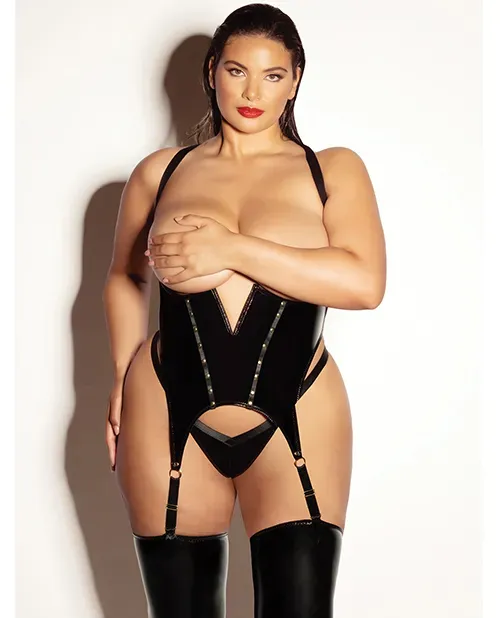 Faux Leather Lingerie: Vinyl, Wet Look and How to Care for All of It
Faux leather lingerie, vinyl bodysuits and wet look sets share a glossy surface and almost nothing else in common...Read more