UV reactive clothing glows because it contains fluorescent molecules that absorb ultraviolet light and re-emit it as...
Latest posts
-
 UV Reactive Clothing: What Actually Glows Under a Blacklight and WhyRead more
-
 Open Cup, Peek-a-Boo and Cupless Bras: What They Are and How They FitRead more
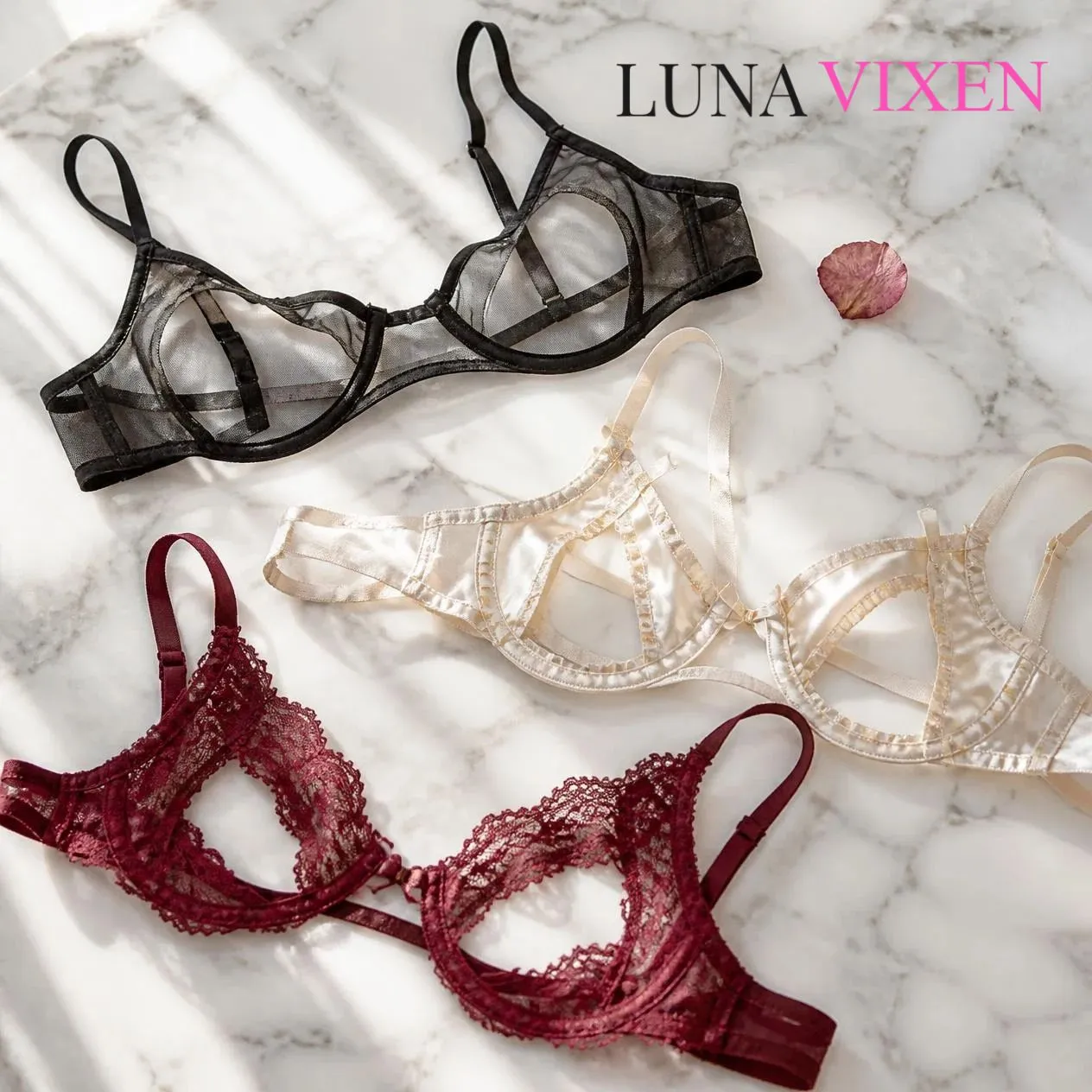
Open cup, cupless, peek-a-boo, shelf, quarter cup: the names get used interchangeably almost everywhere, and they are...
-
 Lingerie for Every Anniversary: What to Wear and Why It WorksRead more
The right lingerie for a specific occasion is less about the garment and more about knowing what that moment actually...
-
 Plus Size Lingerie Fit Guide: Sizing, Fabric and What Actually WorksRead more
Plus size lingerie fit is its own skill set, and the biggest obstacle is usually language: sizes labeled Queen, 1X,...
-
 Lingerie for Every Body Type: What Works and WhyRead more
The cuts that feel right on your body are not random. Lingerie works or doesn't work based on how its structure...
-
 How to Buy Lingerie for the First Time (Without the Guesswork)Read more
Buying lingerie for the first time feels harder than it should be, mostly because no one explains the basics and...
-
 Types of Lingerie Fabric: What Sheer, Mesh and Lace Actually DoRead more
The words on a lingerie label are doing real work. Mesh, lace, powernet and satin each behave differently on the...
-
 How to Wash Lingerie Without Ruining It: A Guide by FabricRead more
Different fabrics fail for different reasons. Lace snags, satin watermarks, vinyl cracks, UV reactive dye fades under...
-
 Thigh High Stockings: Denier, Seams and How to Keep Them UpRead more
Thigh high stockings stay up when three things align: the right denier for the occasion, a band that fits your thigh...
-
 Corset vs Bustier vs Basque vs Waist Cincher: Which One Do You Actually Need?Read more
Corset, bustier, basque, waist cincher: the names get used interchangeably online and almost never mean the same...
Blog categories
Search in blog
Archived posts

Bodystocking Guide: Styles, Fit and How to Wear One
A bodystocking is a single piece that covers the torso and legs in one continuous shell, and it works for bedroom wear, layering under sheer clothes or over a bodysuit, or anywhere you want coverage and exposure at the same time. The category splits into a handful of distinct styles, each with different stretch, strength and fit logic. This guide covers all of it: construction differences, the open versus closed crotch question, how to size honestly, and the practical steps that keep a delicate piece intact the first time you wear it.
What is the difference between fishnet, lace and sheer mesh construction?
The short answer is structure. Fishnet is a knotted or looped open grid, lace is a patterned fabric built from twisted or braided threads, and sheer mesh is a woven or knit base fabric with very fine, even holes. Each one sits against skin differently, stretches differently and reads differently at a distance.
Fishnet has the most open construction of the three. The diamonds or hexagons in the grid are actual voids, which is why it leaves a visible impression on skin under pressure. Diamond size matters more than people expect: a wide-grid fishnet reads bold and graphic, while a micro-grid almost disappears until the light catches it at an angle.
Lace is the most complex. The pattern is structural, not printed or embossed, so it moves with the body without distorting the motif. Stretch lace uses an elastane-blend yarn that gives it recovery; rigid lace, common in corsetry panels, holds its shape but won't contour. The weight of the thread determines whether it looks delicate or architectural.
Sheer mesh sits between the two. The weave is tight enough that it reads as a near-solid fabric from across the room, but translucent up close. It layers well under lace panels, and it's the construction you'll usually find in the body sections of a bodystocking when the designer wants coverage that still reveals.
In practice the three are often combined. A single garment might use a lace yoke, a mesh torso panel and fishnet sleeves, each chosen because it does a specific job in that specific zone of the body.
Halter, long sleeve, footed: which bodystocking style works for what?
The cut determines the occasion as much as the fabric does. Halter styles suit warmer wear and pair cleanly under low-back looks. Long sleeves read more dramatic, better for cooler months or when you want coverage that still shows skin. Footed styles are their own category entirely.
A halter neckline keeps shoulders bare and tends to sit lighter on the body. The trade-off is that your arms are fully exposed, which matters if you want an all-over effect rather than just a torso piece.
Long-sleeve fishnet is the style that photographs well and wears well in December. The crochet net bodystocking with long sleeves has a wider open weave than standard fishnet, which softens the look considerably. Tighter mesh like the classic long-sleeve fishnet presses closer to the skin and gives a sharper graphic line.
Footed styles are the most committed option. They run from ankle to neck and read as a second skin rather than a garment layered over one. The effect under sheer clothing is specific and intentional. Not for everyone, not meant to be.
Open-crotch constructions are a functional detail, not a style category on their own. They appear across halter and long-sleeve cuts both, so think of them as a feature you choose within whichever silhouette already fits your purpose.
Back details are worth checking before you buy. A criss-cross back changes the entire rear view, which matters if you are pairing the piece with anything backless or sheer.
Open crotch versus closed: what actually matters and when?
The difference is purely practical. Open crotch means you can wear the piece without removing it; closed crotch means the garment covers everything and you take it off the same way you'd take off a bodysuit. Which one you want depends on what you're actually doing in it, not on some hierarchy of daring.
Closed crotch bodystockings work well when the garment is more costume than proposition. You're wearing it under something, photographing an outfit, or you want the clean unbroken line that full coverage gives across the front. The heart fishnet with rhinestone accents is a good example of a piece where the visual detail is the whole point and closed coverage keeps the pattern intact.
Open crotch makes sense when removal is inconvenient or beside the point. A full long sleeve fishnet bodystocking takes real effort to get out of, especially in low light. The open construction means you don't have to.
There are a few things the choice does not affect: warmth, coverage from the waist up, how the fabric sits on your body, or how the garment photographs from behind. Those are determined by the cut and mesh size, not the crotch style.
One small practical note: open crotch styles can feel less secure during extended wear if you're moving around a lot. The gusset on a closed style anchors the fabric. Keep that in mind if you're wearing a bodystocking for hours rather than minutes.
Does one size fits most really fit most bodies?
Mostly, no. "One size fits most" is a practical shortcut, not a promise. It typically covers a range somewhere between a size small and a large, and it works well within that window. Outside it, the fit can go wrong in ways that matter: fabric pulling, seams sitting in the wrong place, or the garment cutting off circulation entirely.
Bodystockings are actually one of the better categories for this claim, because fishnet and stretch mesh have real give. A floral fishnet bodystocking with cincher detail and garter straps built from open-knit fabric can accommodate a wider range of bodies than a structured underwire bra with four hook-and-eye columns ever could.
The catch is the structured parts. Rhinestone trim, corseted panels, fixed garter straps, ribbon bows, these elements do not stretch. So a piece like the fishnet bodystocking with rhinestone corseted detail fits more flexibly at the torso than the corseted section itself will allow. Know which part of the garment has no give, and measure against that.
Height matters more than most people expect. A bodystocking cut for a 5'5" frame will bunch at the crotch on someone shorter and pull uncomfortably on someone taller, regardless of how stretchy the mesh is.
The honest answer is to read the size chart weight and height ranges, not just the label. One size fits most is a starting point, not a guarantee.
How do you put on a bodystocking without tearing it?
Slow down and scrunch. Gather the entire piece from the neck down into your hands before stepping in, the way you would with sheer hosiery. Rushing is what causes snags. Rings, rough skin on heels, and long nails are responsible for the vast majority of tears, so deal with those first.
Start by turning the bodystocking right-side out and scrunching each leg portion down to the foot opening. Step in one foot at a time, ease the fabric up over your heel, then gradually unroll upward. Never pull from the waist and drag fabric over your feet.
Once both legs are in, work the torso section up slowly, smoothing as you go rather than tugging at one point. Fishnet in particular has a defined hole structure, and concentrated force on a single strand will pop it. Even pressure across your whole palm, not fingertips, makes the difference.
A few specifics worth knowing. Rhinestone details and metal closures on styles like the fishnet bodystocking with rhinestone corseted detail need a clear path over the body so they don't catch mid-pull. If a garment has open panels or garter straps, those should hang free and be fastened after everything else is in place, not before.
Jewelry off, nails smooth, moisturizer absorbed. Those three things alone will double how long any fine-net piece lasts.
Common questions
Can you wear a bodystocking under regular clothes?
Yes, and it works better than most people expect. A sheer or fishnet bodystocking worn under high-waisted trousers and a tucked shirt reads as a subtle texture layer, not a costume. The key is keeping the outer pieces structured enough to anchor the look. Opaque styles in black or nude sit cleanly under knit dresses and jumpsuits without bunching. The one thing to watch is the foot opening. A stirrup or open-toe style disappears under almost anything. A full-foot style needs boots or it becomes its own conversation.
How do you wash a bodystocking so it lasts?
Cold water, mesh laundry bag, gentle cycle. That is the whole answer. Bodystockings are typically nylon, spandex or a blend of both, and agitation is what breaks down the fibers and snags the knit. Skip the dryer entirely. Roll the piece in a clean towel to press out excess water, then lay it flat or hang it away from direct heat. Detergent matters too. A small amount of a delicate wash formula is enough. Fabric softener sounds kind but it coats elastic fibers and shortens their lifespan.
What do you wear with a bodystocking if you want to go out in it?
Treat it the way you would treat a fitted bodysuit. A sheer or mesh style pairs well with a wide-leg trouser and a blazer thrown on top, the sheer panels visible at the collar and cuffs rather than on full display. For something more evening-leaning, a midi skirt with a high waist and a low-cut bodystocking underneath covers the question without overthinking it. Footwear is the detail that tips the whole thing. A serious heel or a sharp boot signals that the sheer layer is intentional, not accidental.
Can a bodystocking work if you have a longer torso?
It can, with some caveats worth knowing before you buy. Most bodystockings are cut for an average torso length, which means a longer torso pulls the rise down and puts stress on the seams at the crotch. Look for styles described as plus-length or with a higher spandex percentage, since more stretch gives the fabric somewhere to go. Open-crotch designs sidestep the fit issue entirely and tend to run more generously through the body. If a style you love runs short, wearing it as a top tucked into a skirt rather than as a full-body piece solves the problem cleanly.
Posted in:
Lingerie
Related posts
-
 Types of Lingerie: The Complete Guide
Lingerie covers a lot of ground, from a barely-there bodysuit on a Tuesday to a structured corset for a night out....Read more
-
 Babydoll vs Chemise: What's the Difference?
Babydoll, chemise, teddy, bodysuit: four words that describe four genuinely different garments, and the industry does...Read more
-
 How to Measure for Lingerie (and Actually Get It Right)
Lingerie sizing is not a mystery, but it does work differently from the jeans or tops you buy without thinking twice....Read more
-
 Corset Garter Sets, Explained
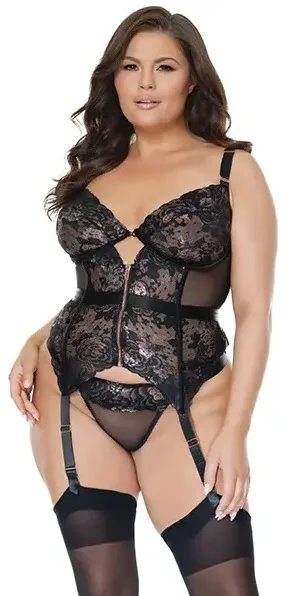
A corset garter set pairs a structured, boned corset or bustier with a matching garter belt so the whole look comes...Read more
-
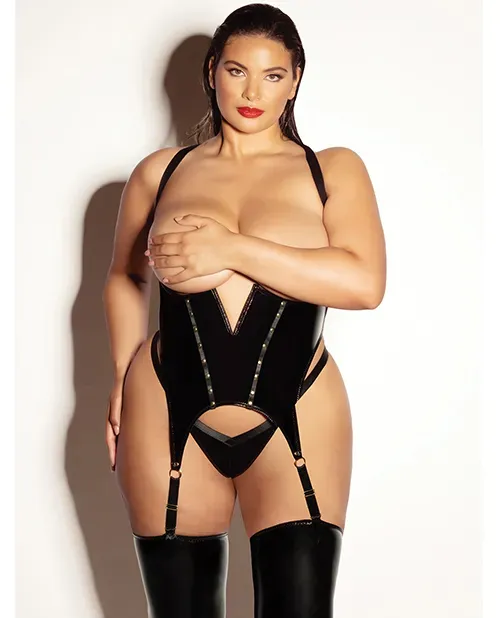 Faux Leather Lingerie: Vinyl, Wet Look and How to Care for All of It
Faux leather lingerie, vinyl bodysuits and wet look sets share a glossy surface and almost nothing else in common...Read more